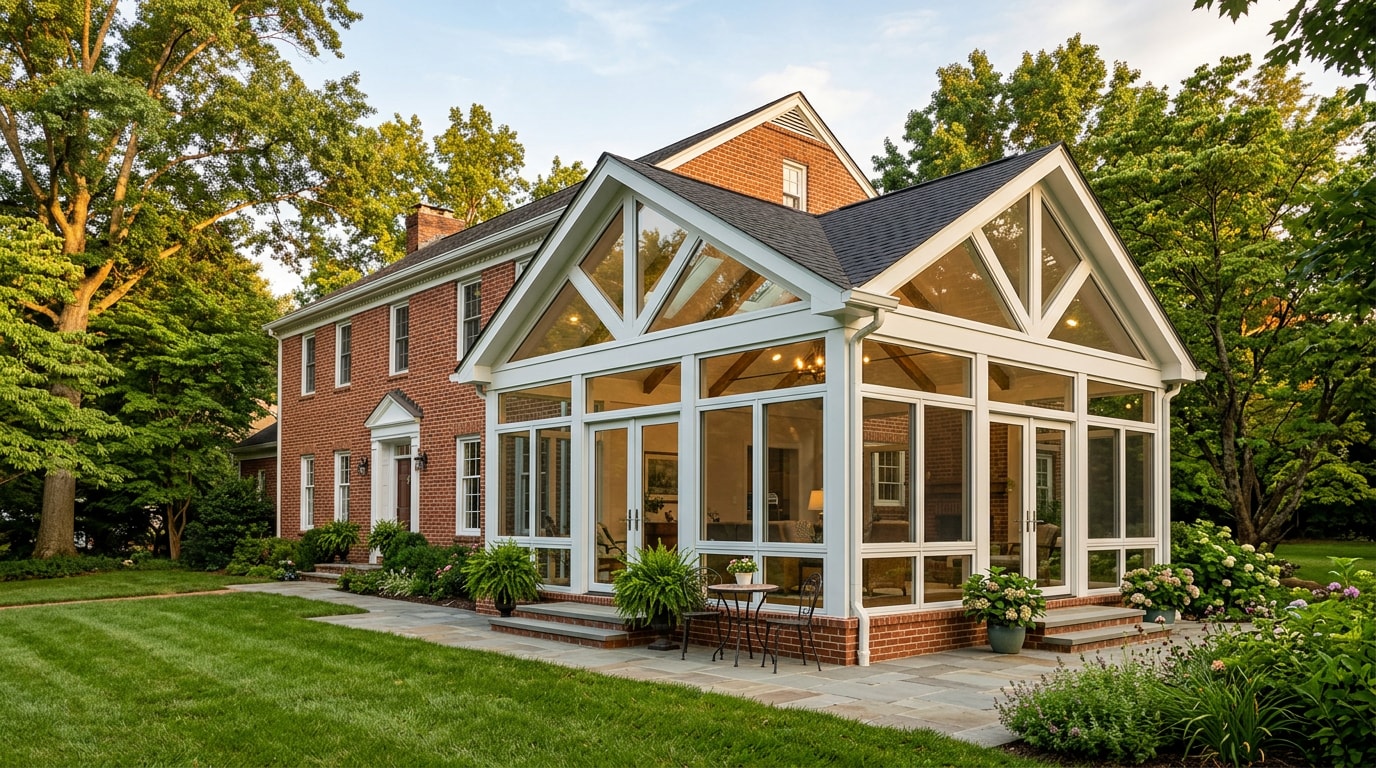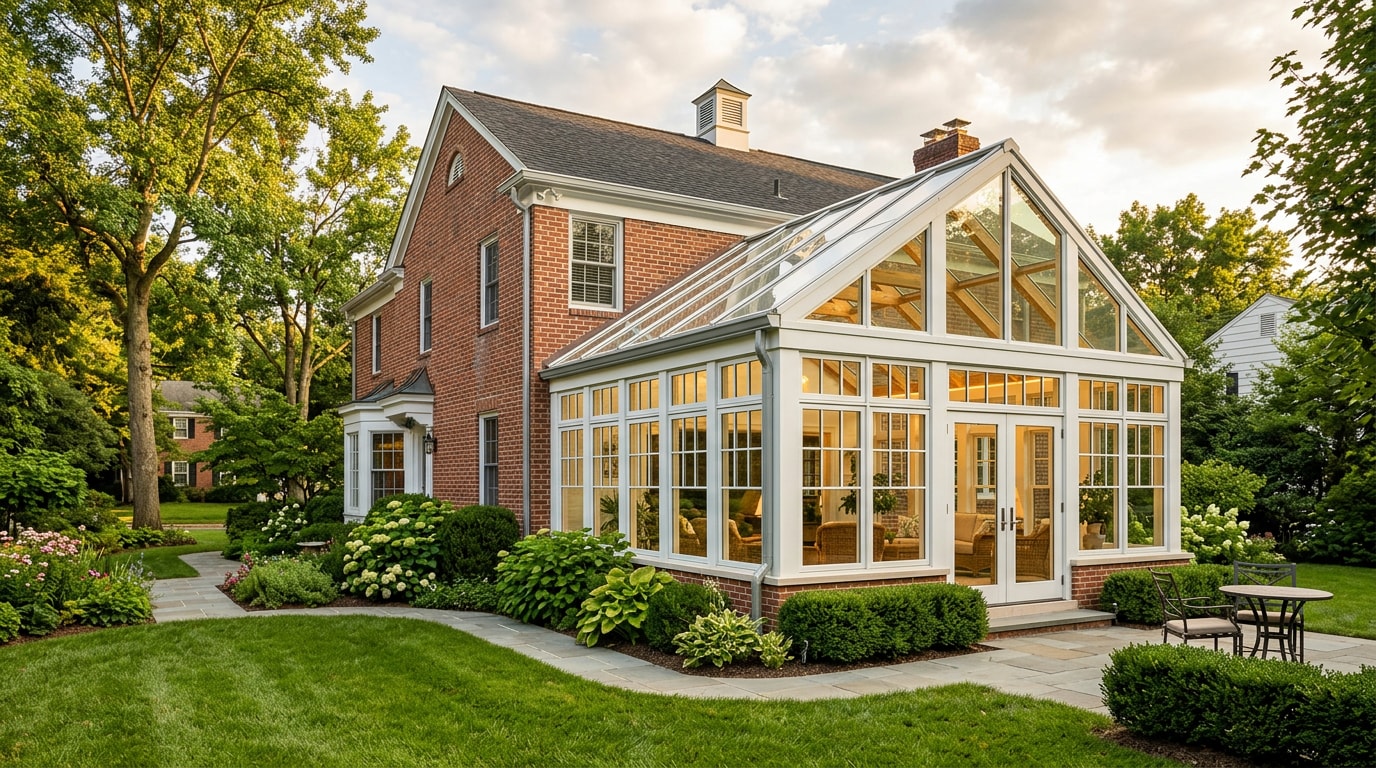
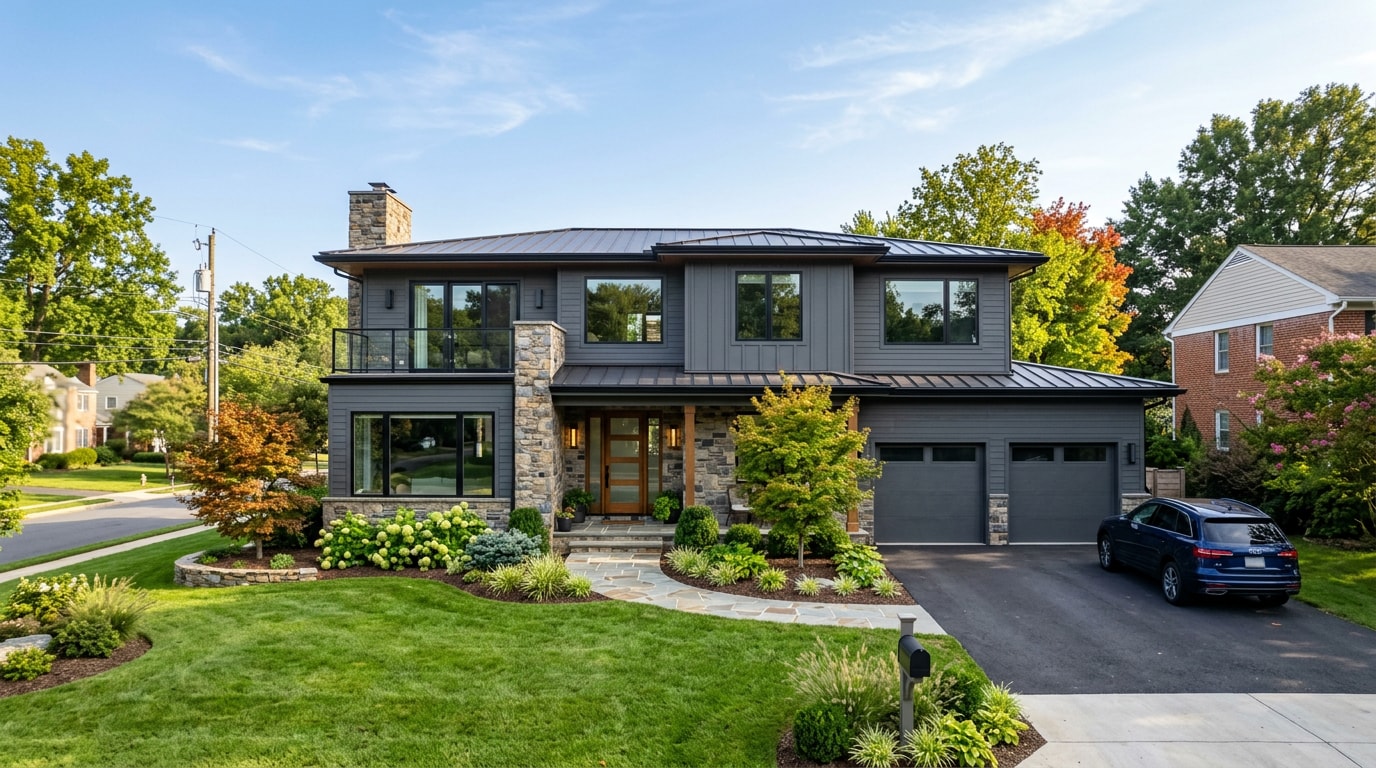
Modular home builders Reston, VA residents hire are rarely headquartered in Reston itself. You'll typically work with a regional dealer-builder who partners with an out-of-state factory, then handles permitting, foundation work, and final assembly on your lot. That split between factory and local site work is exactly where cost overruns and scheduling delays happen if nobody local is managing it.
Key Takeaways
- Cost: A fully installed modular home in Northern Virginia generally runs $90 to $180 per square foot, above statewide averages because of local land, labor, and permit costs.
- Timeline: Expect 4 to 7 months from factory order to move-in, versus 12 to 14 months for a comparable custom stick-built home.
- Code path: Modular homes carry a Virginia DHCD insignia and are built to the same Uniform Statewide Building Code as site-built houses. Manufactured homes follow a separate federal HUD code.
- The bigger local hurdle: It's rarely the state code. HOA architectural review and Fairfax County permitting timelines trip up more Reston buyers than anything the factory does.
Who Actually Builds Modular Homes Near Reston
No modular factory operates inside Fairfax County, so every "local" builder is a dealer managing a supply chain from outside the region. Buyers researching Fairfax County modular homes typically end up comparing the same handful of Mid-Atlantic manufacturers through local partner builders.
Westchester Modular Homes, based in Wingdale, New York, ships custom modular plans into Northern Virginia through partner builders, with turnkey pricing commonly landing between $220,000 and $550,000 depending on size and finish level. Excel Homes, headquartered in Liverpool, Pennsylvania, is another established Mid-Atlantic name with a similar price range, and its smaller module widths tend to work well on the tighter suburban lots common around Reston and Herndon.
Because both companies sell through partner builders rather than directly, exact pricing and plan availability shift depending on which Northern Virginia dealer handles your project. If you're also weighing coverage in Fairfax, VA or further out toward Great Falls, VA, confirm delivery radius before committing to a floor plan.
2026 Cost Breakdown for a Reston-Area Modular Home
The factory invoice is the easy part to budget. Site work, foundation, permitting, and utility hookups bill separately, and in Fairfax County those line items push most projects toward the top of national ranges.
| Cost component | Typical range (Reston-area) |
|---|---|
| Base modular unit (factory only) | $50–$100 per sq ft |
| Fully installed, turnkey | $90–$180 per sq ft |
| Foundation | $15,000–$50,000 |
| Site prep and grading | $5,000–$25,000 |
| Utility connections (water, sewer, electric, or well/septic) | $5,000–$30,000 |
| Permits and inspections | $1,500–$6,000 |
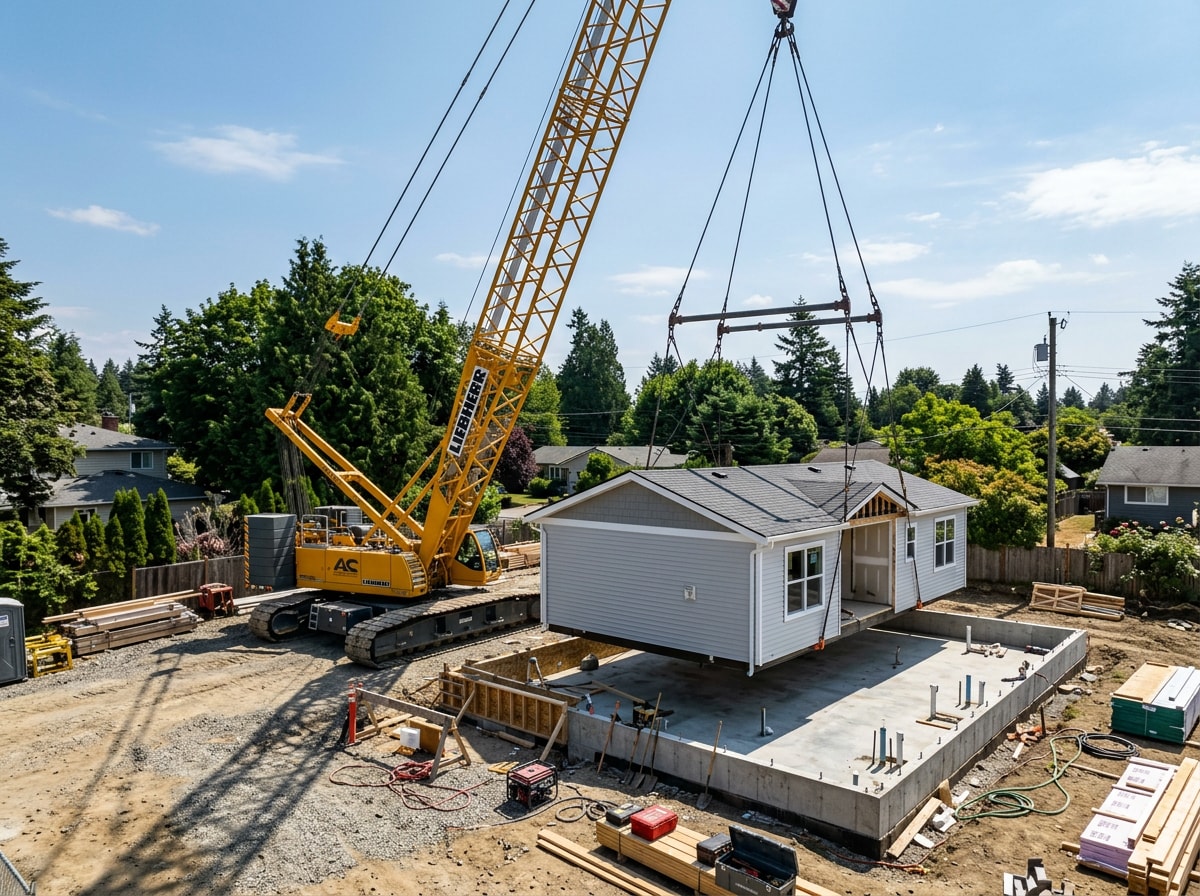
| Delivery and crane set | $8,000–$23,000 |
| Interior finish-out after set | $10,000–$40,000 |
For a typical 1,500 to 2,200 square foot home, that puts most Reston-area projects in the $280,000 to $480,000 range once land is excluded. Sloped lots, long utility runs, or tree clearing can add tens of thousands more before the first module ever arrives.
Modular vs. Manufactured vs. Site-Built: The Difference That Actually Matters
Buyers conflate these terms constantly, and the confusion affects financing and appraisal, not just terminology.
| Feature | Modular | Manufactured (HUD) | Site-Built |
|---|---|---|---|
| Code | Virginia USBC (same as site-built) | Federal HUD Code | Virginia USBC |
| Regulator | Virginia DHCD | U.S. HUD | Local building department |
| Chassis | None, set on permanent foundation | Permanent steel chassis | N/A |
| Typical appraisal treatment | Comparable to site-built | Separate HUD comp set | Standard |
Virginia's Department of Housing and Community Development is explicit that industrialized buildings, the regulatory term for modular homes, are built to the same codes as a stick-built house, while manufactured homes fall under a completely separate federal standard administered by HUD. That distinction is what a local building official and an appraiser both check first.
Permitting and Code Compliance in Fairfax County
Every modular home sold in Virginia must display a DHCD registration seal before it ever leaves the factory, confirming an independent compliance agency inspected it against the Uniform Statewide Building Code. Once that seal is on the unit, Fairfax County treats the permitting and inspection process essentially the same as a site-built home.
This isn't a small or obscure program. According to the Modular Building Institute, Virginia's industrialized building office issued more than 10,000 registration seals in 2025 alone, a figure that reflects how mainstream modular construction has become in the state. That volume is also why local building officials rarely treat a modular project as unusual paperwork; they process these permits regularly.
Permit timelines still vary by jurisdiction. Rural counties often move faster simply because they have fewer applications in the queue. Reston and the rest of Fairfax County tend to run slower, mainly due to HOA review layers stacked on top of standard permitting, not because the state code itself is more complicated here.
HOA Rules and Zoning Hurdles Around Reston
Code compliance is only half the picture. HOA architectural review boards are often the bigger obstacle for modular buyers in Reston-area subdivisions.
Many Reston HOAs regulate exterior materials, roof pitch, and setback distances well beyond what the state building code requires. A floor plan that's perfectly legal under the USBC can still get rejected by an architectural review committee if the roofline or siding doesn't match neighborhood standards.
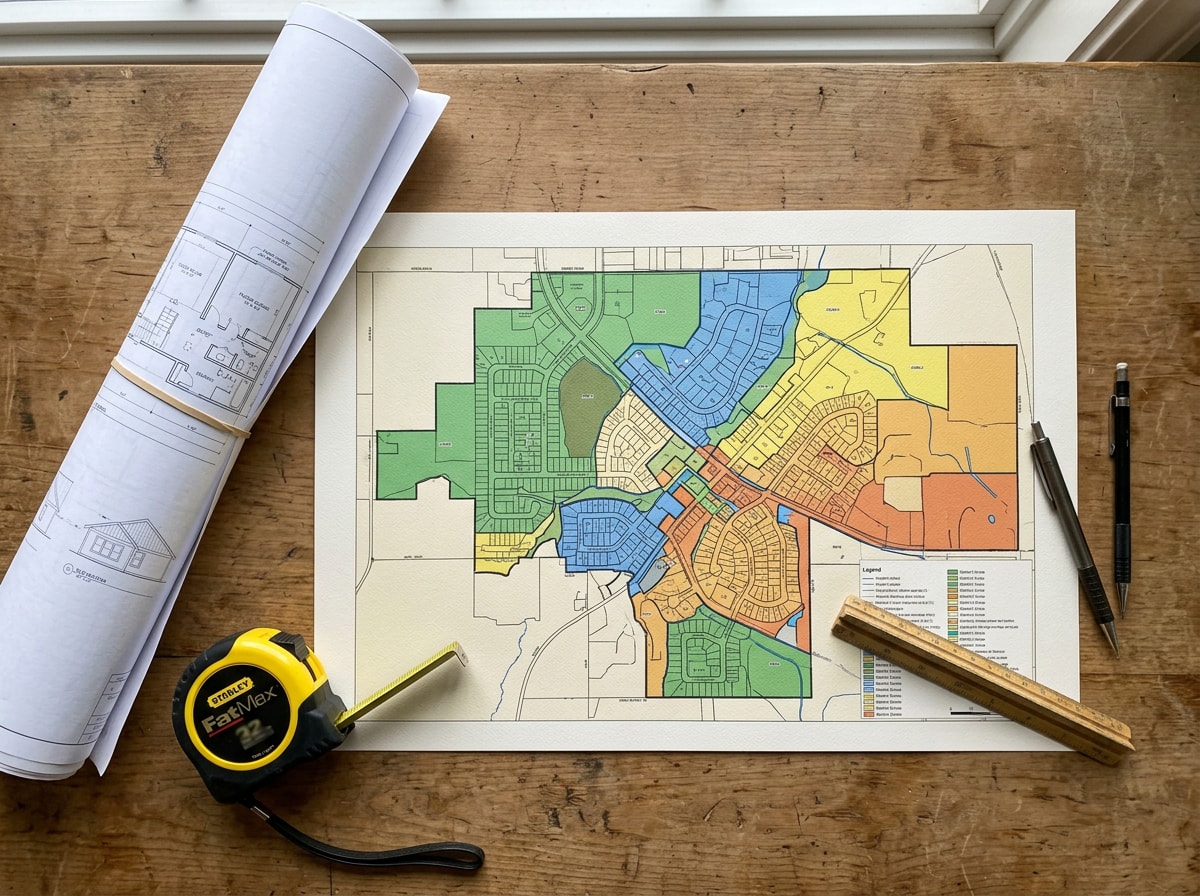
Practically, that means zoning maps aren't the whole story. Pull the HOA covenants for your specific lot before you fall in love with a plan, not after you've put down a deposit.
Where Local Site Work and a General Contractor Fit In
A modular manufacturer builds and ships the box. Someone still has to grade the lot, pour or set the foundation, tie into utilities, pull local permits, and finish the home once it's set, and that work determines whether your project actually hits its 4-to-7-month timeline.
Our crews at Argo Contractor have handled foundation prep, excavation, and post-set finish work for factory-built homes across Fairfax County, and the pattern is consistent: the projects that run on schedule are the ones where a licensed local GC is managing site work before the modules ever leave the factory floor, not after a delivery date is already set.
If you're planning a modular build, or adding onto an existing one, our new construction and home addition teams handle the groundwork, foundation coordination, and finish carpentry that modular dealers typically subcontract out anyway. For a detailed look at what excavation and grading actually cost in this region, our excavating contractors guide breaks down pricing and permit steps in more depth.
You can browse examples of our completed projects or see the full range of our general contracting services. When you're ready to scope site work for a modular build, Get a Free Estimate and we'll walk the lot with you before you lock in a factory order.
Financing a Modular Home in Virginia
Modular home financing isn't limited to a single loan product. Virginia Housing's own lender guidelines state plainly that modular homes are acceptable collateral for all of its financing types, subject to mortgage insurer approval, which puts them on equal footing with site-built homes for most conventional underwriting.
Buyers on larger or more rural Reston-adjacent lots, including parts of Loudoun County and areas near Great Falls, may qualify for a USDA Single Family Housing Guaranteed Loan, which can reduce or eliminate down payment requirements for eligible rural properties. For CrossMod-style manufactured products (not modular homes built to the IRC/USBC), Fannie Mae's MH Advantage and Freddie Mac's CHOICEHome programs offer financing terms closer to standard site-built mortgages than typical manufactured-home loans, though these specifically apply to HUD-code homes with site-built design features rather than true modular construction.
Popular Floor Plans Reston Buyers Compare
Most Reston-area buyers gravitate toward a handful of proven layouts rather than fully custom designs.
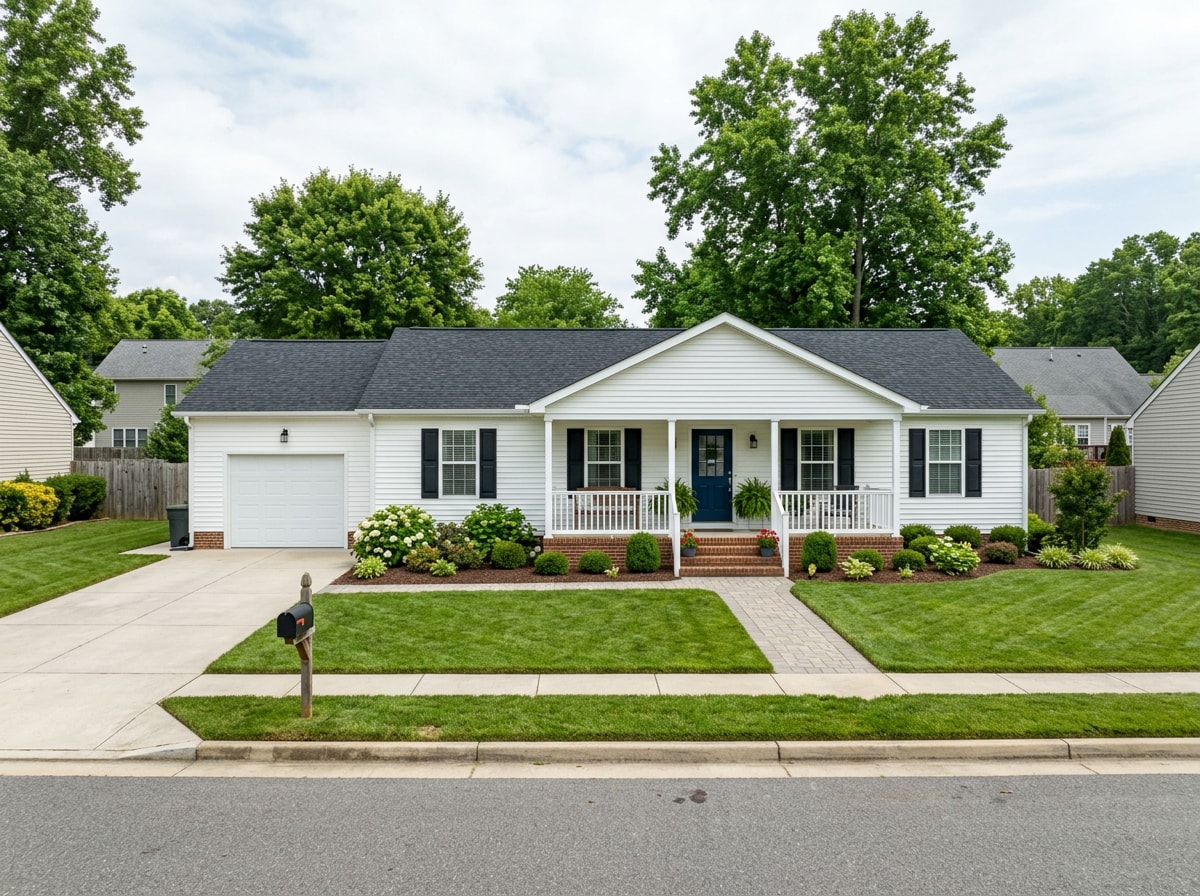
- Ranch-style: 1,200–2,200 sq ft, 2–3 bedrooms, 2 baths. The most requested option, popular with downsizers and single-level living.
- Two-story and Cape Cod: 1,800–3,200 sq ft, 3–4 bedrooms. Common for growing families needing more square footage without a larger lot.
- Split-level and split-foyer: Frequently used on narrower or sloped Northern Virginia lots where a traditional ranch footprint doesn't fit.
Buyer Process and Common Pitfalls
Most modular projects in this market follow a similar sequence:
- Secure land and confirm HOA/zoning compatibility.
- Select and customize a floor plan with your dealer-builder.
- Apply for county permits and finalize the DHCD-registered plan set.
- Complete the factory build while a local contractor preps the foundation and site.
- Deliver, crane-set, and finish the home on-site.
- Schedule final inspection, then appraisal.
That last step hides one of the more common pitfalls. A state-insignia modular home on a permanent foundation generally appraises using the same sales-comparison approach as a site-built house. A HUD-tagged manufactured home appraises against a different, often less favorable, comparable set. Confirm which category your home falls into before you sign, especially if you plan to refinance or resell within five years.
FAQ
What's the actual difference between a modular home and a manufactured home?
Modular homes are built to the same Uniform Statewide Building Code as site-built houses and are regulated by Virginia DHCD. Manufactured homes are built to a separate federal HUD code and sit on a permanent steel chassis rather than a conventional foundation.
Is modular construction permitted in every Virginia county?
Yes. State-insignia modular homes are permitted statewide and treated like site-built construction under the Uniform Statewide Building Code. The bigger limiting factor around Reston is local HOA covenants and architectural review, not the state code.
How long does the permit process take in Fairfax County?
Timelines vary by jurisdiction and project complexity. Rural counties often move faster due to lower application volume. Reston and the rest of Fairfax County tend to run slower mainly because of HOA review layered on top of standard county permitting.
How much does a modular home cost per square foot in 2026?
Fully installed modular homes in Northern Virginia generally run $90 to $180 per square foot. Reston-area projects trend toward the upper half of that range because of higher land, labor, and permitting costs compared to the rest of the state.
Do modular homes appraise the same as site-built homes?
Modular homes on a permanent foundation with a DHCD insignia generally appraise using the same sales-comparison approach as site-built homes of similar size and location. Manufactured homes with a HUD tag use a separate, often more limited, comparable set.
Can I hire a local contractor for site work if I buy my modular home from an out-of-state manufacturer?
Yes, and it's standard practice. Most modular dealers don't handle excavation, foundation work, utility tie-ins, or finish carpentry directly. A licensed local general contractor typically manages that scope under a separate contract, coordinated around the factory's delivery schedule.