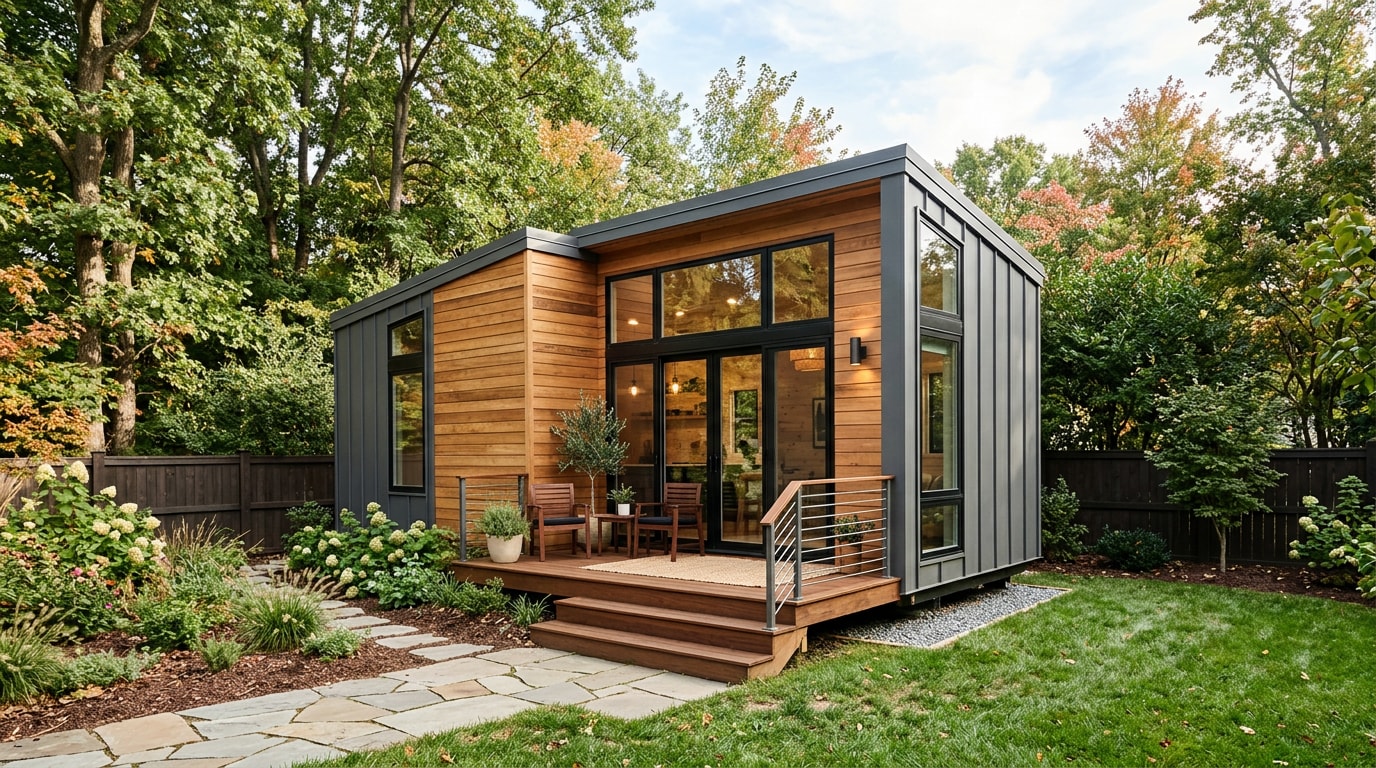
Tiny home builders in Gaithersburg, MD are fielding more calls as local home prices climb and buyers look for a smaller, faster path to ownership. A tiny home here typically costs a fraction of a traditional house, whether you go with a kit, a prefab unit, or a fully custom build on wheels or a foundation. This guide breaks down who's actually building tiny homes near Gaithersburg, what they cost in 2026, and a zoning change about to reshape what's allowed in Montgomery County backyards.
Our crews at Argo Contractor handle site work, foundations, and permitting for additions and accessory structures across Montgomery County, so we see firsthand how often permit delays, not construction itself, stall a tiny home project. That experience shaped this guide. If you want a second opinion on site prep, utility connections, or an ADU-style build, you can request a free estimate once you've narrowed down a builder.
Featured Tiny Home Builders Serving Gaithersburg & Montgomery County
Builders in this space aren't interchangeable. Some specialize in tiny homes on wheels (THOWs), others focus on foundation builds or park models, and distance from Gaithersburg affects both delivery cost and how familiar a crew is with local permitting.
A genuinely local tiny home company usually means fewer surprises during inspection and faster answers to permit questions. Out-of-state builders can still be worth a call if they bring certifications or production experience that regional shops don't have.
I Can Build It – Hagerstown, Maryland
I Can Build It is a Maryland-based builder roughly two hours from Gaithersburg, specializing in THOWs, shells, and material packages that include electrical and plumbing rough-ins. Since its founding, I Can Build It has been featured on Tiny House Nation and has won several awards. For buyers who want a Maryland-based crew with national recognition, it's worth a conversation even though the shop sits outside Montgomery County.
Great Lakes Tiny Home – Baltic, Ohio
Great Lakes Tiny Home operates out of state but ships nationwide, including to the Mid-Atlantic. Great Lakes Tiny Home is a family-run builder based in Baltic, Ohio, specializing in high-end custom Park Model RVs, prefab tiny homes, and modular options, delivering turnkey builds across all 48 contiguous states.
The company holds RVIA certification and builds to ANSI A119.5 standards , which matters if you're comparing park models against a traditional THOW, since certification affects financing and insurability. Budget for delivery and crane placement separately when you're working with any out-of-state manufacturer.
If you're vetting a custom builder closer to home, start by asking to see recent Montgomery County projects, not just a statewide service claim. For a wider look at the region's prefab and modular landscape, our modular home companies shortlist for the DC area covers several builders who also take on smaller footprint projects.
Tiny Home Costs in Gaithersburg & Maryland
Pricing swings widely based on build type, finish level, and whether you're buying a kit or paying a crew to do everything. Here's a realistic breakdown for the region:
| Build Type | Typical Cost | Timeline | Notes |
|---|---|---|---|
| Basic kit | $15,000–$30,000 | 2–6 weeks | Most hands-on assembly; you or a contractor finish the interior |
| Prefab / factory-built | $30,000–$70,000 | 4–8 weeks | Delivered mostly finished; crane or flatbed delivery adds cost |
| Custom THOW | $40,000–$85,000 | 8–16 weeks | Built to your spec on a trailer frame |
| Custom foundation build | $60,000–$140,000+ | 10–20 weeks | Full residential code compliance, easier to finance |
Statewide tiny house pricing in Maryland tracks a similarly broad range, with some full-service builders quoting well into six figures once delivery, site work, and customization are included. Your final number should also account for land prep, utility hookups, permitting fees, and delivery if you're going prefab. These line items rarely show up in a builder's base quote but add up fast.
Gaithersburg's housing costs are part of what's driving interest here. The city's median home value sits well above $500,000, which makes even a $100,000 custom tiny home a meaningfully cheaper path to ownership.
Types of Tiny Homes: THOW vs. Foundation vs. Prefab
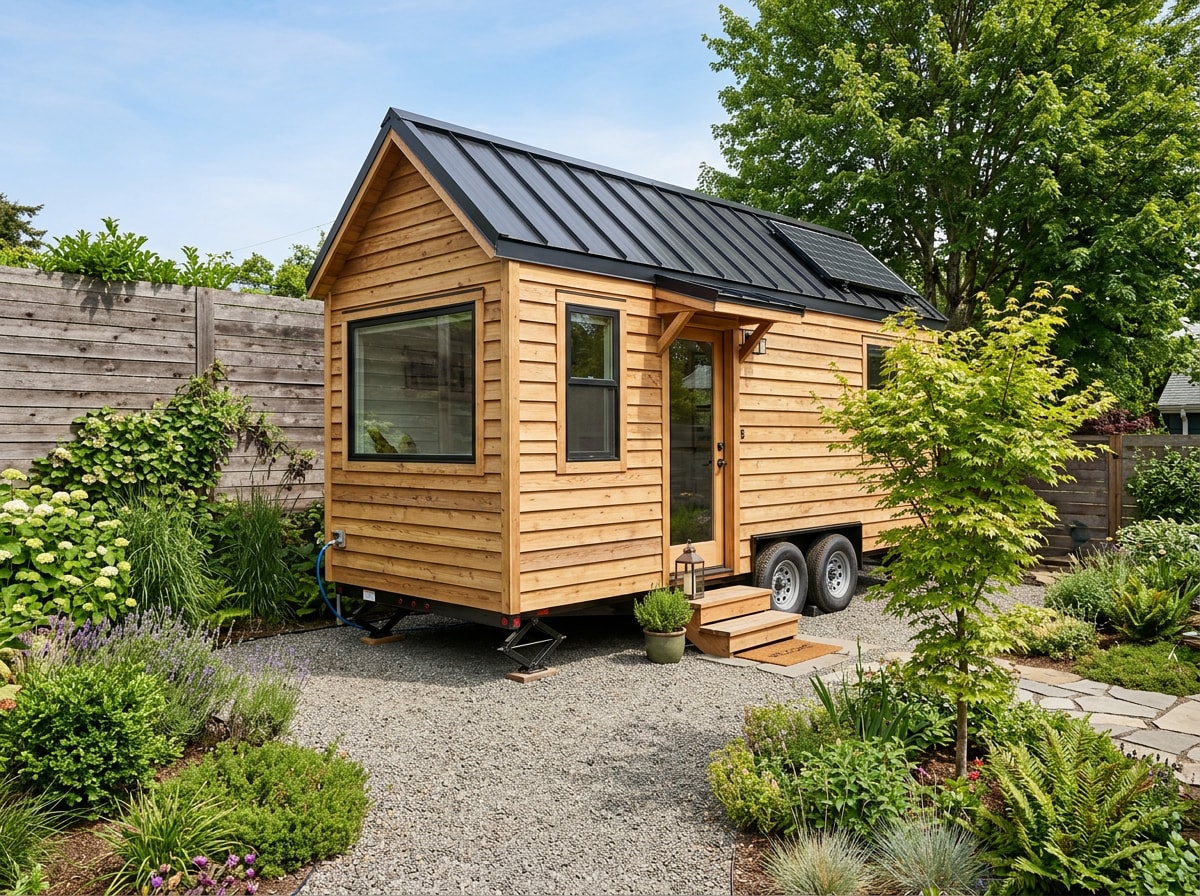
A tiny home on wheels (THOW) is built on a trailer frame and becomes road-legal when it meets RV industry standards. A foundation tiny home is a permanent structure built on a slab or piers and follows standard residential building codes instead of RV standards.
THOWs typically range from 160 to 400 square feet, often blend RV-style and residential finishes, and offer more flexibility if local zoning shifts down the road. Foundation homes trade that mobility for permanence and are usually easier to finance with a traditional mortgage. Prefab units split the difference: faster and cheaper upfront, but less tailored to your exact lot.
| Factor | THOW | Foundation | Prefab |
|---|---|---|---|
| Typical cost | $40K–$85K | $60K–$140K+ | $30K–$70K |
| Timeline | 8–16 weeks | 10–20 weeks | 4–8 weeks |
| Permitting complexity | Moderate (RV classification) | High (full residential code) | Low to moderate |
| Financing/resale | Harder (RV-style loans) | Easier (standard mortgage) | Varies by placement |
This distinction matters specifically in Montgomery County, where the permitting path differs depending on whether your unit is classified as a vehicle or a dwelling. As a condition of membership, manufacturers pledge in writing that they will build RVs that conform to the NFPA 1192 Standard and Park Model RVs that conform to the ANSI 119.5 Standard , so confirm current RV Industry Association standards before assuming any wheeled unit automatically qualifies as road-legal in Maryland.
How the Build Process Works
Building a tiny home follows a predictable arc: design consultation, construction, then move-in. Knowing this before you call a builder helps you set realistic expectations for timeline and cost.
Design Your Tiny Home
The first decision point is choosing your floor plan, square footage, and finish level. A good builder walks you through custom floor plans during a design consultation, factoring in your lot size, local setback rules, and how you plan to use the space.
This is also when you decide between wheels and a foundation, since that choice affects everything downstream: permitting, utility hookups, and financing options. If you're adding the tiny home as a backyard structure rather than a standalone purchase, it's worth comparing that approach against a conventional home addition, which may qualify for more financing options.
Build & Move In
Once plans are approved, your tiny home gets built either on-site or at a factory. Delivery and site prep are easy to overlook when comparing prefab versus on-site builds. A factory-built unit still needs a prepped pad, utility connections, and sometimes a crane for placement, so budget time and money for that step separately.
Tiny House Laws, Zoning & Building Codes in Maryland
Tiny houses aren't explicitly banned in Maryland, but they also aren't automatically legal everywhere. Foundation-built tiny homes fall under the same codes as any traditional dwelling. Maryland's law related to building codes is called the Maryland Building Performance Standards (MBPS), requiring each jurisdiction to use the same edition of the International Building Code, the International Residential Code, and the International Energy Conservation Code.
Maryland's current residential code includes a tiny house provision, but it isn't automatic statewide. The provisions contained in Appendix AQ are not mandatory unless specifically referenced in the adopting ordinance, and the appendix relaxes code requirements for houses 400 square feet or less, applicable to tiny houses used as single dwelling units. That means your county or city still has to formally adopt it, so confirm current status with Maryland's Division of Labor and Industry before finalizing plans.
Gaithersburg specifically runs its own permitting program rather than defaulting to the county. The City of Gaithersburg's currently adopted building and trade codes include the 2021 International Building Code, 2021 International Residential Code, and 2021 International Energy Conservation Code, among others, with city amendments. Check the City of Gaithersburg's permitting and inspections page directly before you buy land or sign a contract, since wheeled units may be classified as RVs depending on how they're used.
The bigger shift for Gaithersburg homeowners is Maryland's new accessory dwelling unit law. During its 2025 session, the Maryland General Assembly passed HB 1466, which codifies state policy supporting development of Accessory Dwelling Units and requires that counties and municipalities with planning and zoning authority adopt a local law authorizing ADU development by October 1, 2026.
ADUs are defined as a secondary unit on the same lot as a primary single-family detached dwelling that is up to 75% of the size of the primary unit. Practically, this means more Gaithersburg homeowners will soon be able to place a permitted small dwelling in their backyard without the zoning fights that were common just a few years ago. You can review the state's own ADU legislation summary for the full requirements and timeline.
Climate matters too. Gaithersburg winters bring meaningful snow load, and any builder working in the region needs to account for insulation and framing standards suited to Mid-Atlantic weather, not just a generic national spec sheet.
How to Choose the Right Tiny Home Builder
Choosing a builder rooted in Maryland often means smoother approvals and fewer legal surprises compared to hiring an out-of-state company unfamiliar with local code quirks. Vetting a tiny house contractor starts with asking direct questions and watching how confidently they answer.
Questions to Ask Tiny Home Builders
Before requesting a quote, ask these directly:
- Are your builds code-compliant in my county?
- Do you offer assistance with permits and zoning?
- What certifications do your tiny houses meet?
- Can I visit a completed build or an active job site?
- What warranties are included, and for how long?
Watch for these red flags:
- No RVIA certification for wheeled units
- Reluctance to help with permits or zoning
- Vague or missing warranty terms
- No references or visitable job sites
A legitimate, certified builder will have no trouble producing documentation on request. If your plans involve site work, excavation, or a foundation rather than a standalone trailer purchase, that's where a licensed general contractor typically gets involved alongside the tiny home manufacturer.
For buyers planning something closer to a true small home than a trailer, it's also worth pricing out a new construction build against a tiny home kit. Sometimes the cost gap is smaller than expected once permitting and utility work are factored in. You can see examples of completed local work on our projects page.
Ready to compare options for your Gaithersburg property? Request a free estimate and we'll walk through site prep, permitting, and whether an addition or accessory structure makes more sense than a standalone build. Our team also serves nearby Bethesda, MD and the broader Gaithersburg, MD area for general contracting and home addition work.
FAQ
How much does a tiny home cost in Gaithersburg, MD?
Expect $15,000 to $30,000 for a basic kit, $30,000 to $70,000 for a prefab unit, and $60,000 to $140,000 or more for a fully custom build on a foundation. Your final number depends on materials, square footage, delivery, and whether you choose wheels or a foundation.
Are tiny homes legal in Gaithersburg, Maryland?
Foundation-built tiny homes fall under the same residential code as any house, but Maryland's tiny house code provision (Appendix AQ) is only in effect where a county or city has formally adopted it. Confirm directly with Gaithersburg's permitting and inspections office before buying land or signing a contract, since the city runs its own permit program separate from Montgomery County.
Can I put a tiny home in my backyard in Gaithersburg?
Possibly, once local rules catch up with Maryland's 2025 ADU law. The state requires every jurisdiction with zoning authority to authorize accessory dwelling units by October 1, 2026, which should open more backyards to small secondary structures. Zoning is separate from building code, so both still apply.
How long does it take to build a tiny home?
Custom foundation builds typically take 10 to 20 weeks from design approval to completion. Prefab units are built in a factory in 4 to 8 weeks and delivered mostly move-in ready. Kits can be assembled in 2 to 6 weeks depending on your experience level.
What's the difference between a tiny home on wheels and a foundation tiny home?
A tiny home on wheels is built on a trailer frame and is road-legal when it meets RV industry standards; it can be relocated and is often classified as an RV. A foundation tiny home is a permanent structure on a slab or piers that follows standard residential building codes, similar to any traditional house.
Start your project with a team that already knows Montgomery County's permitting process. Get a free estimate or visit our homepage to see the full range of general contracting services we offer across the DC, Maryland, and Northern Virginia area.