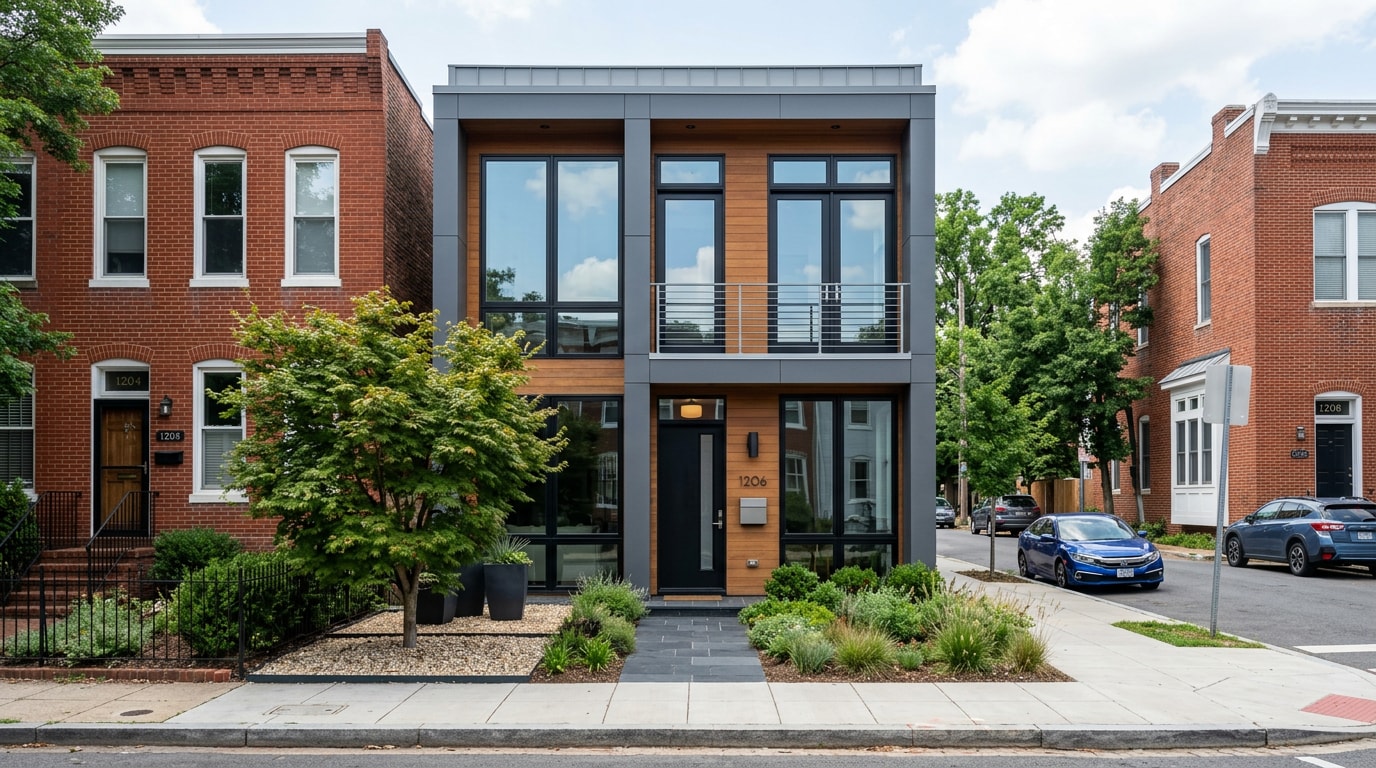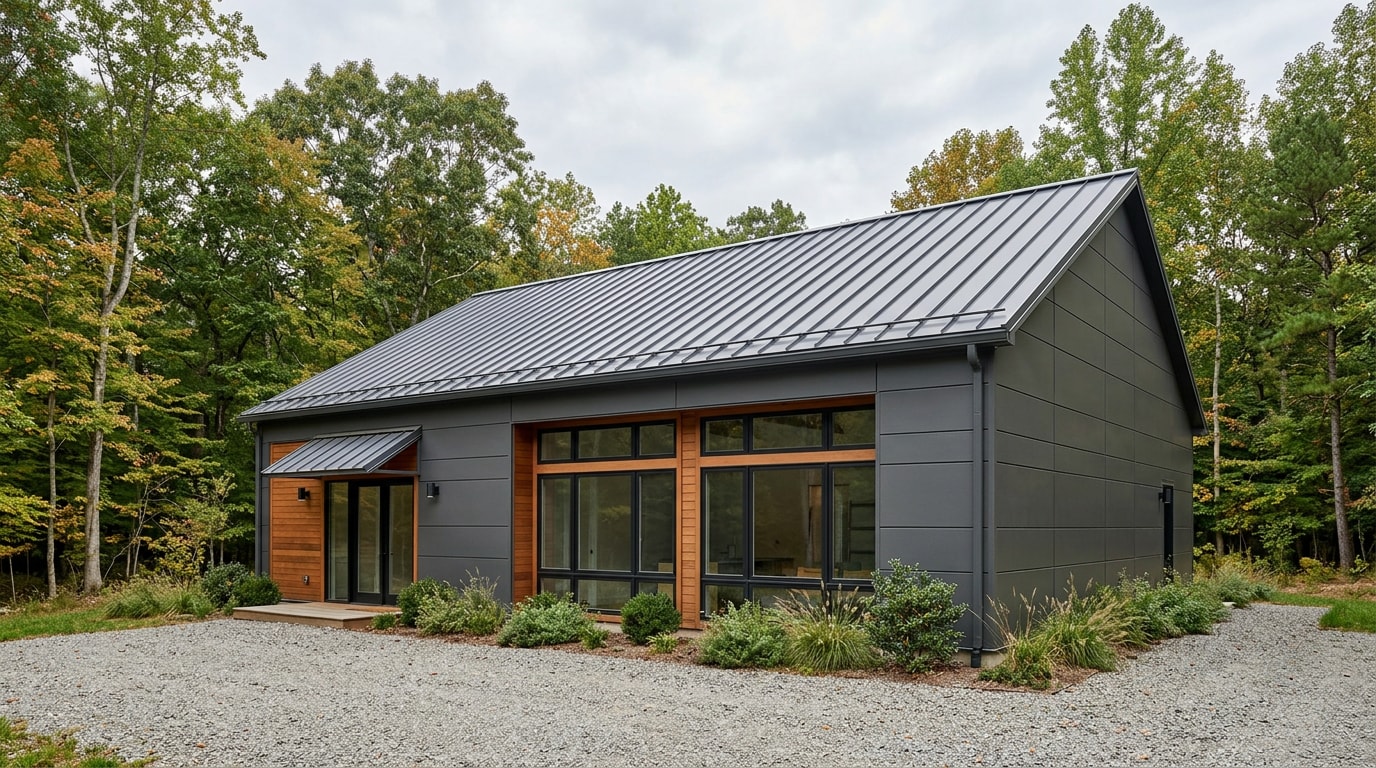
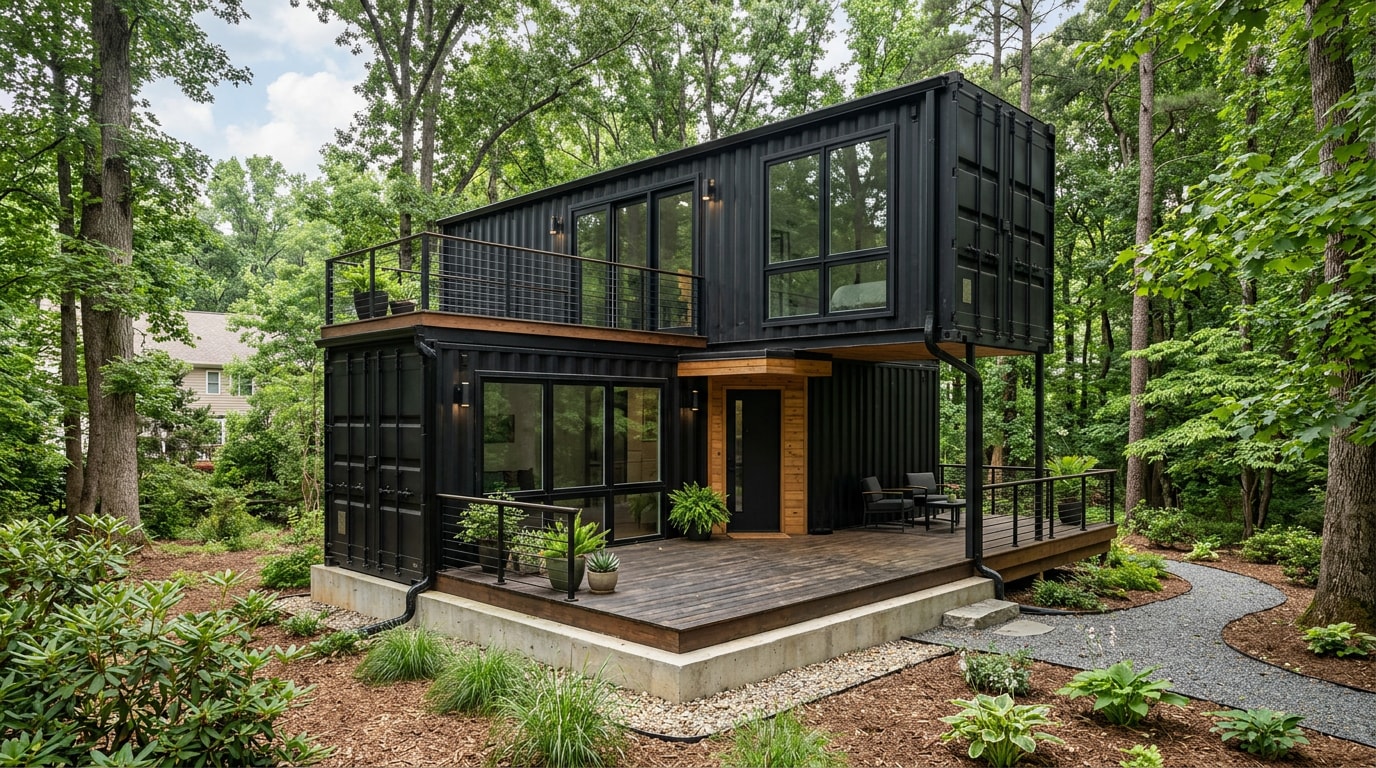
Shipping container home builders in Great Falls, VA actually split into two trades: fabricators who weld the steel shell, and contractors who turn that shell into a permitted house. This guide covers real Fairfax County cost data, the permit path the county actually enforces, and which builders and suppliers show up in Virginia project records. Skip the sales pitch here's what a container build actually takes on the ground in Great Falls.
Shipping Container Home Builders Serving Great Falls, VA
Not every company that sells containers builds homes. A handful of firms have real Virginia track records, and a few others show up in regional project discussions without a dedicated Northern Virginia office yet.
How to Vet a Container Home Builder or Fabricator
Before you sign anything, confirm these basics:
- Active license and insurance in Virginia, not just in the state where the company is headquartered.
- Completed Virginia references, ideally in Fairfax, Loudoun, or Prince William counties.
- Hands-on container experience, including structural cutting, welding, and moisture management, not just general residential framing.
- Familiarity with local permitting offices, since a crew that's already worked with Fairfax County reviewers can shave months off your timeline.
- A clear line between fabricator and installer, so you know who's responsible for the shell versus the finished, livable structure.
ShelterMode
ShelterMode is one of the premier shipping container home builders in Virginia, specializing in custom spaces for cargo architecture enthusiasts.
Its models range from single-bedroom units to spaces large enough for around six people.
Popular products include the Architainer, Barnbox, and Boxhaus lines.
CW Dwellings
CW Dwellings offers available floor plans and also builds custom-designed container homes, working with clients from design and planning through construction, delivery, and on-site installation. That full-service model appeals to buyers who don't want to manage subcontractors themselves.
Other Names You'll Find in Regional Searches
A few other companies turn up when you search Virginia container builders, with varying levels of local documentation:
- Backcountry Containers describes itself as
a family-owned container home builder that uses a combination of 20- and 40-foot containers to create custom structures.
- JPW Shipping Container Homes is listed in regional guides as
an experienced and dependable professional home builder in Virginia , though public project documentation for Northern Virginia specifically is thin.
- K&K International shows up in Virginia builder roundups, but functions more as a container supplier than a design-build contractor, so confirm scope before you call.
Where Argo Contractor Fits In
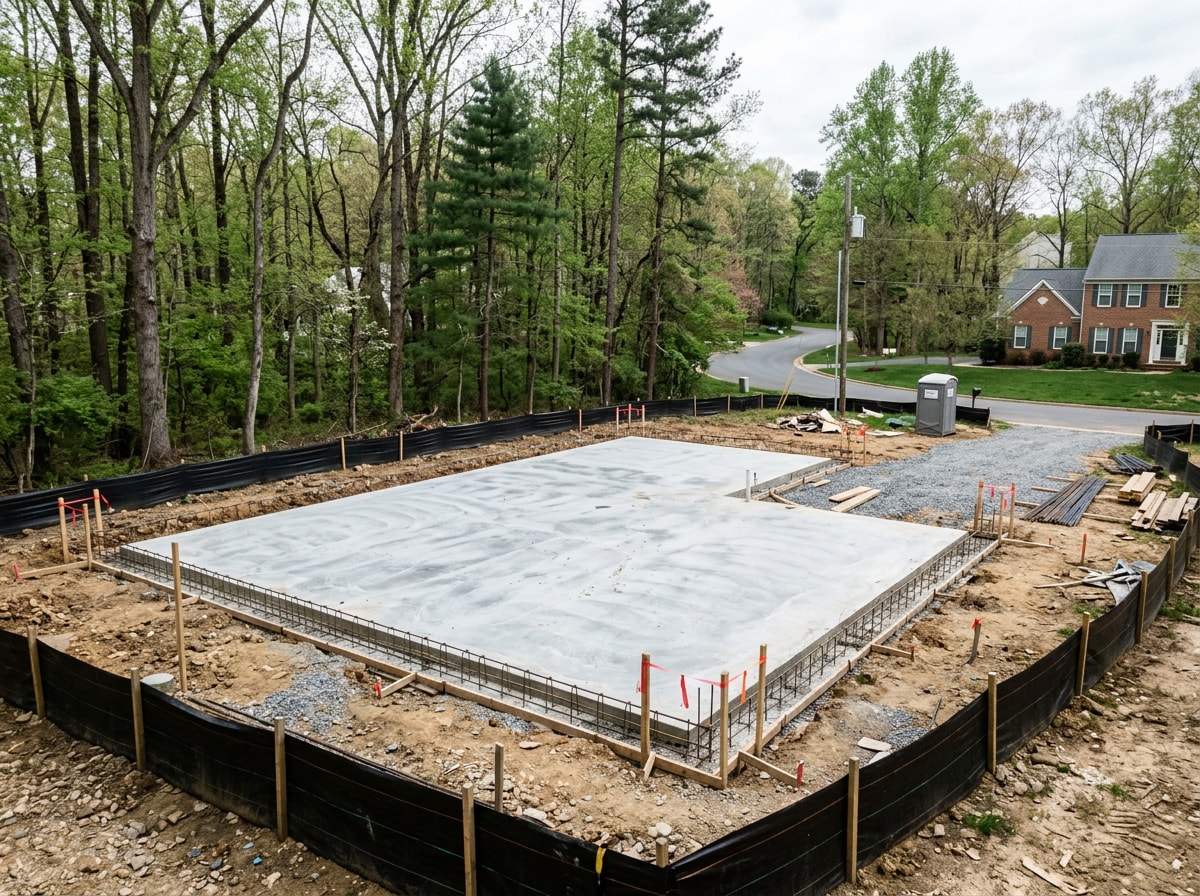
Here's the part most lists skip: the fabricator who welds your container shell is rarely the company pulling your Fairfax County building permit, pouring your foundation, or tying your utilities into an existing structure. That's general contractor work.
Our crews navigate Fairfax County's plan review process regularly on new construction and home addition projects, and it's the same review track a permanent container dwelling has to pass. If you're assembling a team for a Great Falls container build, we handle the foundation, framing tie-ins, and finish-out while you coordinate the shell with a fabricator. Contact us to talk through where your project stands.
What Is a Shipping Container Home?
A shipping container home is a residence built from one or more repurposed steel cargo containers, modified with insulation, windows, plumbing, and electrical systems. Builders either stack and weld multiple units together or use a single container as a standalone studio or accessory structure.
One of the biggest advantages is price, since the rooms and structure are essentially already built, which saves money on construction and leaves very little need for framing or other structural work. Steel also resists fire and pests better than wood framing, though every modification still has to be engineered to hold up under Virginia's snow and wind loads.
For Great Falls buyers specifically, the appeal is practical. Fairfax County land is expensive, and a container shell gives you a structurally sound starting point without the months-long framing phase of a conventional build. You can see how container builds fit into our broader project work on the Argo Contractor homepage.
Shipping Container Home Cost in Great Falls, VA
Cost estimates for container homes vary widely depending on container count, finish level, and site conditions. Here's what the actual data shows, not a generic national guess.
| Build Type | Typical Cost Range | Notes |
|---|---|---|
| Container home, Fairfax-area projects | $40,710 to $59,647 (full span $12,304 to $102,538) | Based on completed local project data |
| Container home, statewide Virginia | $15,000 to $250,000 | Depends heavily on size and finish level |
| Traditional stick-built, Virginia average | Around $405,000 | Full custom build, land excluded |
| Traditional stick-built, national average | $428,215 total (about $162 per sq ft) | 2024 builder survey data |
Local Fairfax-area project data puts the typical shipping container house cost between $40,710 and $59,647, with the full range running from $12,304 to $102,538 across tracked projects.
Statewide, whole-project container builds in Virginia typically run $15,000 to $250,000, against roughly $405,000 for a comparable traditional stick-built home.
For context on conventional construction, the National Association of Home Builders puts the 2024 national average construction cost for a single-family home at $428,215, or about $162 per finished square foot , according to NAHB's Cost of Constructing a Home survey. Great Falls projects tend to land at the higher end of these ranges because of lot preparation, utility runs, and stricter local plan review.
Zoning and Permitting for Container Homes in Fairfax County
Virginia doesn't ban container homes at the state level, but the real answer to "is this legal here" depends on where the lot sits and what you're actually building.
A permanent container dwelling in unincorporated Fairfax County, which includes Great Falls, is treated as new construction. It falls under Part I of the Virginia Uniform Statewide Building Code, known as the Virginia Construction Code, which contains the regulations specific to new buildings and structures , administered through the Virginia Department of Housing and Community Development, which governs industrialized, modular, and manufactured building regulations alongside standard construction codes . You can review the current code structure on the Virginia DHCD codes page.
That's a different, heavier process than the rule for a bare storage container sitting in a yard. Fairfax County's administrative permit for a portable storage container caps the structure at no taller than 8.5 feet, with a cumulative floor area that cannot exceed 130 square feet per dwelling unit , and allows a detached home on a lot up to 36,000 square feet to keep a container for 30 consecutive days in six months, or 60 days on larger lots, without a permit at all .
Confusing the two tracks is one of the most common mistakes buyers make. A 130-square-foot storage-container permit will never cover a livable container home, no matter how the interior is finished. If you're building to live in it, plan for full plan review, structural engineering submissions, and inspections, the same as any other new house in Great Falls.
Container Homes for Sale vs. Builders: Know the Difference
Before you call anyone, understand what kind of company you're actually contacting.
- A builder or design-build firm handles the full process from design through construction, delivery, and installation.
- A supplier sells raw shipping containers that you modify yourself or hand off to a separate contractor.
Some suppliers are large-volume buyers of used containers and offer wholesale pricing across different grades and conditions. Others, like the regional names mentioned above, don't build homes at all, they just move inventory. Knowing which type of company you're calling saves weeks of mismatched expectations. If your plan involves a full custom build instead of a container conversion, our guide to new home contractors in Great Falls, VA walks through that process and cost range side by side.
Designing Your Floor Plan
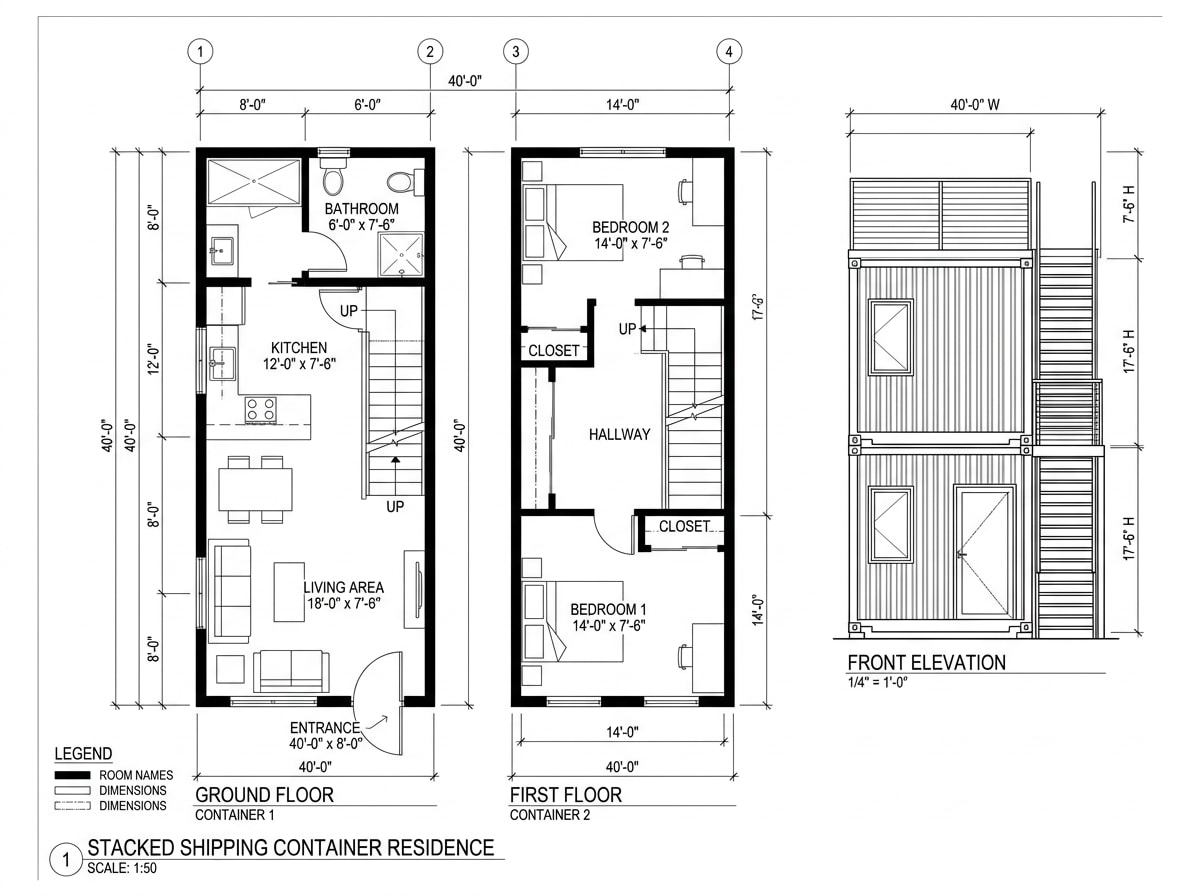
Floor plans generally fall into two categories. Single-container layouts work well for studios, guest houses, or small accessory structures. Multi-container configurations stack or connect units side by side for larger living spaces.
Stacking adds square footage vertically without expanding the lot footprint, but it increases structural engineering requirements significantly. Every stacked connection point needs its own load calculation, which is part of why multi-container homes take longer to permit than single-unit builds.
Insurance and Financing Considerations
Not every insurer is comfortable underwriting a non-traditional structure, so shop builder's-risk coverage early, before construction starts.
On the financing side, lenders generally need the home classified as real property on a permanent foundation to treat it like a conventional mortgage. Modular homes built to conform to state, local, or regional codes are usually classified as real property and are typically eligible as site-built single-family homes for financing and appraisal purposes , per Freddie Mac's manufactured and modular home guidelines. A permanently affixed container home built to the Virginia Construction Code is generally evaluated the same way, though every lender still underwrites it case by case, so confirm early.
FAQ
Are shipping container homes legal in Great Falls, VA?
Yes. Virginia doesn't ban them statewide, and Fairfax County, which includes Great Falls, reviews a permanent container dwelling under the same Virginia Construction Code used for any new single-family home. HOAs may add their own design restrictions on top of county code.
How much does a shipping container home cost in Great Falls, VA?
Local Fairfax-area project data runs from about $12,304 to $102,538, with most completed projects landing between $40,710 and $59,647. Statewide whole-build costs for larger custom container homes can reach $250,000 depending on size and finish.
Do I need a permit for a shipping container home in Fairfax County?
Yes, and it's a full building permit, not the lighter administrative permit used for temporary storage containers. A livable container home goes through the same plan review, structural engineering, and inspection process as conventional new construction.
Can you get a mortgage for a container home in Virginia?
Possibly, if it's permanently affixed to a foundation and meets Virginia Construction Code requirements. Lenders typically need to classify it as real property, similar to how modular homes are treated, but not every lender underwrites container dwellings the same way, so confirm with your lender before finalizing a design.
How long does it take to build a shipping container home?
The steel shell itself can be fabricated and set in days once delivered, but that's rarely the bottleneck. Fairfax County's engineering review, utility permits, foundation work, and inspections add months regardless of how fast the shell goes up.
Do shipping container homes hold their resale value?
It's harder to say than with a conventional home. Appraisers often have fewer comparable sales to pull from in a given area, which can make both financing and resale valuation less predictable than a standard stick-built house.
What's the difference between a container home builder and a container supplier?
A builder designs, engineers, and installs the finished home. A supplier sells you the raw container and leaves modification to you or a separate contractor. Confirm which one you're talking to before you ask for a quote.